I have met people who lump all the laws and rules in the Old Testament together. Some say they’re all abolished and we don’t need to keep them. Others say they’re all still binding and apply to us today. But Old Testament laws were not all equal or at the same level. They had different purposes and they were delivered in different ways. So before we get into the why God gave the Ten Commandments, we need to be able to distinguish why they’re different from the other laws in the Torah (books of Moses).
The Three Laws
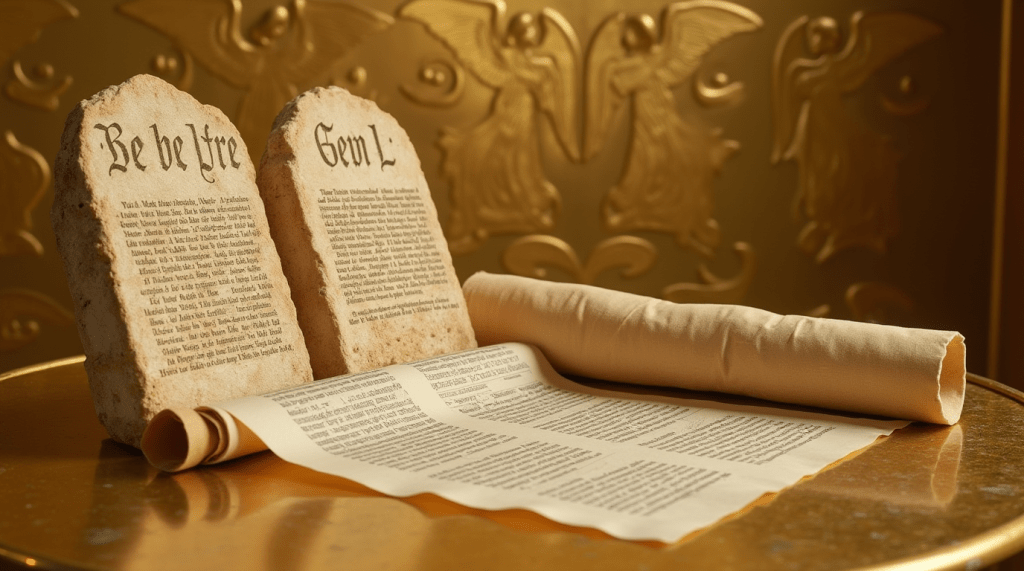
- Civil Law – These laws helped newly freed slaves organize themselves as a nation, and improved justice in their culture
- Military, property ownership and inheritance, social and welfare, sanitation and cleanliness, contracts, criminal justice and punishment are all included here
- Ceremonial Law – These laws were symbolic of God’s plan to save humans from sin. They pointed forward to the Messiah.
- Once the Messiah came, there was nothing to point forward to, because the real event had happened
- Moral Law – These laws represent love and respect for God, and love and respect for fellow humans
- The Moral Laws never change because they are a glimpse of God’s character, and He never changes.
There’s a lot packed into those bullet points, and we should unpack some of it, at the very least so it’s clear I’m not coming up with these ideas from my own imagination.
Civil Law
Regarding the Civil Law, in Numbers chapter 2 we see the neat and precise organization of the camp of the Israelites. In chapters 22-24 (the story of Balaam), Balak the king of Moab saw their camp and it filled him with fear. So organized and laid out in such a unique way with the tribes grouped in massive squares around the tabernacle.
Here’s one of the civil laws from Deuteronomy, given using the New Living Translation to make it easier to understand:
“You must have a designated area outside the camp where you can go to relieve yourself. Each of you must have a spade as part of your equipment. Whenever you relieve yourself, dig a hole with the spade and cover the excrement.” Deuteronomy 23:12-13
Does this law still apply today? Not with indoor plumbing, flushable toilets, and septic or sewer systems. If you’re camping for an extended period, it’s probably a good idea to prevent the spread of disease.
I said “improved justice”, related to the civil laws, because it wasn’t complete justice. God was working towards an ideal. Let’s understand that the Israelites had just come out of generations of slavery to a pagan nation. They even owned each other as slaves, but God put a limit on that, saying every seventh year a slave must go free.
The same thing with divorce. Men were kicking their wives out on the street when they got tired of them, and the law in Deuteronomy 24:1-4 said that a man must have a good moral reason and legal documents for divorce. Who did this law protect? The women. But even the Pharisees (teachers of the law in Jesus’ time) missed the point.
“They said to Him, “Why then did Moses command to give a certificate of divorce, and to put her away?”
He said to them, “Moses, because of the hardness of your hearts, permitted you to divorce your wives, but from the beginning it was not so.” Matthew 19:7-8
Jesus is saying that it was never God’s will that divorce would happen at all. But we humans have hard, stubborn hearts, and God was reforming the Israelites coming out of bondage as much as they could bear to change at the time. He had to start somewhere, and He started by limiting (though not eliminating at that time) slavery and divorce. God doesn’t want either of these.
Ceremonial Law
There was a sacrificial system, which started outside the tabernacle and moved inside to the sanctuary. The animal sacrifices illustrated that:
“the wages of sin is death, but the gift of God is eternal life in Christ Jesus our Lord” Romans 6:23
Paul and other apostles used the combination of “Christ Jesus” or “Jesus Christ” because Christ existed as God (with the Father, John 1:1, John 10:30) through all eternity. Then Christ was born as a human, Jesus. Still God, but fully human – Christ Jesus.
The Israelites in the Sinai Desert didn’t know Jesus, but they were looking forward to the Messiah’s coming. Neither Jews or Christians have made regular animal sin offerings for nearly 2,000 years because the Messiah, the ultimate sacrifice for sin, gave His life nearly 2,000 years ago.
There were feast days, like Passover, Pentecost, the Feast of Tabernacles (Pesach, Shavuot, Sukkot), which were reminders and celebrations of how God had delivered and guided the Israelites.
Moral Law
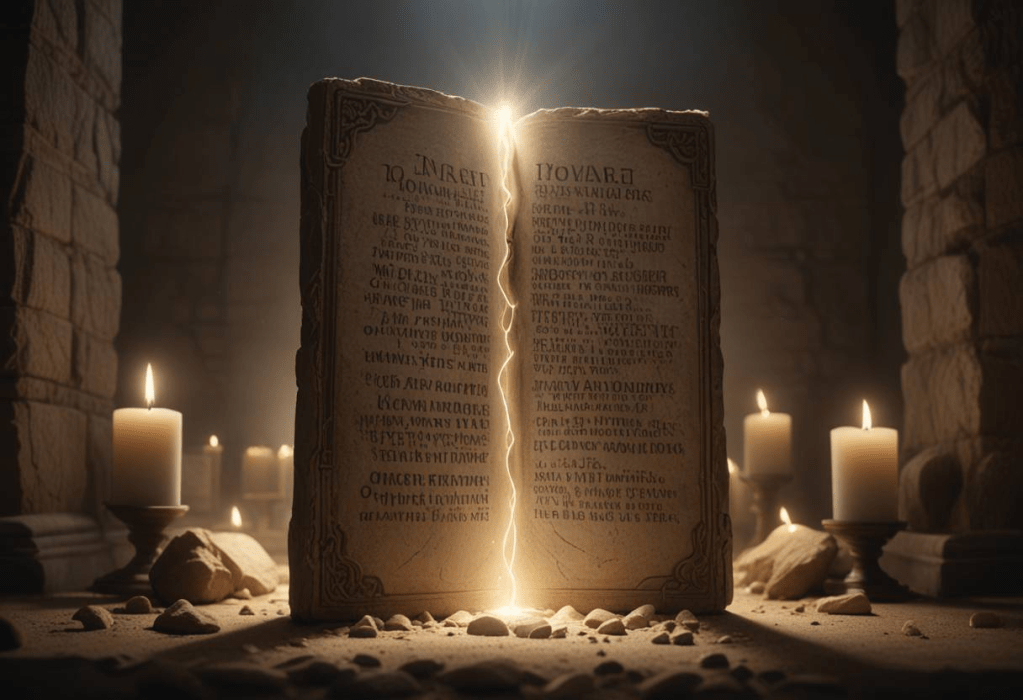
Now we get to the Ten Commandments. Are there other laws in the Old Testament which are moral in nature apart from the Ten Commandments? Yes, but you’ll find that most of them link back to the Ten Commandments in one way or another. And the Ten Commandments were delivered in a different way compared to other laws, which we’ll get to in a minute.
The first four of the Ten Commandments are about how we relate to God, and involve how we worship Him (paraphrased from Exodus 20):
- Don’t worship other/false gods (monotheism)
- Don’t make an image to represent a god (even the real God)
- Don’t use God’s name carelessly, like a swear word, and don’t claim you belong to God but act like the Devil
- Remember to honor the Sabbath Day
- Follow God’s example of resting the seventh day of the week, after six days of work
- Because God made EVERYTHING, and this is how He wants to be acknowledged and worshiped
The next six out of the Ten relate to how we love and respect our fellow humans:
- Honor your parents
- Don’t murder
- Don’t take what doesn’t belong to you
- Don’t commit adultery (break your promises to your spouse)
- Don’t lie and deceive
- Don’t desire and long after what others have
What a different world this would be if everyone followed just those last six laws! In previous posts, I’ve written about false gods being very real, except they aren’t actually gods, but demons. (Galatians 4:8, 1 Corinthians 10:20) So isn’t it interesting that those who follow false gods sacrifice their own children (murder), and practiced ritual prostitution at pagan shrines (fornication, adultery), and lose justice in their society because they begin to lie, bribe, steal, and act from selfish motives? The influence of the false gods brings in behavior opposite of what God requires of His children.
In this way, we can see that not only the last six, but the first four about how we worship God affect the lives of humans. God deserves worship and respect because He made us, our world, and the universe, the fourth commandments states. But that fourth law of Sabbath rest on the seventh day was “made for man” (Mark 2:27). Even in the laws about the worship of God, He has human’s best interest at heart.
The Delivery

Most of the messages God gave directly to humans in the Bible were brought by an angel, or more often a prophet was inspired to write. But the Ten Commandments were NOT delivered this way.
“…there were thunderings and lightnings, and a thick cloud on the mountain; and the sound of the trumpet was very loud, so that all the people who were in the camp trembled.”
“Now Mount Sinai was completely in smoke, because the Lord descended upon it in fire. Its smoke ascended like the smoke of a furnace, and the whole mountain quaked greatly.” Exodus 19:16, 18
First God spoke these ten laws to the whole nation verbally in His own voice (Exodus 20:22). What was their reaction to hearing God’s voice? They thought they were going to die! They were so afraid, they told Moses, you talk to God and tell us what He says, but if He talks to us again, we’re afraid we’ll die (my paraphrase of Exodus 20:19).
Second, God wrote with His own finger on tablets of stone, two times, in Exodus 31:18 and Exodus 34:1. Moses was bringing the first set down from the mountain threw them down and broke them, when he saw that the people were already worshipping a golden calf, which they had just promised not to do (Exodus 24:3). So God wrote again on a replacement set of stone tablets.
Both verbally and in writing, God delivered the Ten Commandments Himself, in person. That is amazing! And we should note that God has never in the rest of history shown up in the same manner to make a change to these ten laws.
Who benefits from the Ten Commandments?
Does God personally need a law against murder? No, because He is truly immortal and cannot be killed. (1 Timothy 6:16)
Does God personally need a law against stealing? No, because He made (and technically owns) everything. He can take back what is stolen or create another one. (Psalms 50:10, Exodus 20:11)
Does God personally need a law against deception and lying? No, because He is omniscient and knows everything, and He can look into people’s hearts. (Proverbs 24:12, 1 Samuel 16:7)
So what is the point of God issuing rules He doesn’t need for Himself? What is the purpose? He doesn’t want to see His children oppressed by demon worship and slaughtering each other, and instead He wants them to be blessed and flourish.
When God commissioned Joshua to take Moses’ place, one of the things He said:
“This Book of the Law shall not depart from your mouth, but you shall meditate in it day and night, that you may observe to do according to all that is written in it. For then you will make your way prosperous, and then you will have good success.” Joshua 1:8
And a few hundred years later, when Israel had disobeyed and lost justice and goodness in their society, He said this:
“Thus says the Lord, your Redeemer, the Holy One of Israel:
“I am the Lord your God, Who teaches you to profit, Who leads you by the way you should go. Oh, that you had heeded My commandments! Then your peace would have been like a river,
and your righteousness like the waves of the sea. Your descendants also would have been like the sand, and the offspring of your body like the grains of sand; His name would not have been cut off nor destroyed from before Me.” Isaiah 48:17-19
The point God is making in these passages: “Live this way so you will profit and prosper, and have peace and righteousness, and flourish.”
That term “cut off” means eternal destruction, and it is used often in the Old Testament to refer to the fate of the wicked and sin itself. But this is NOT what God wants for humans. He wants peace and goodness for His people. “Would have been”… If they had followed His commands faithfully. But you can read all through the Old Testament and see they often suffered the natural consequences as a result of breaking God’s commandments.
Satan often paints God in the minds of humans like this:
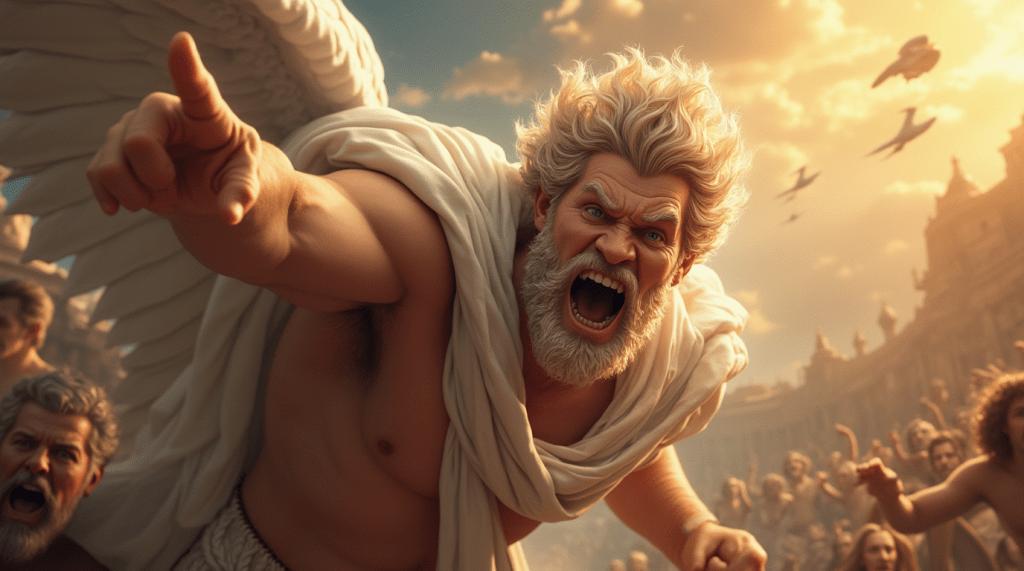
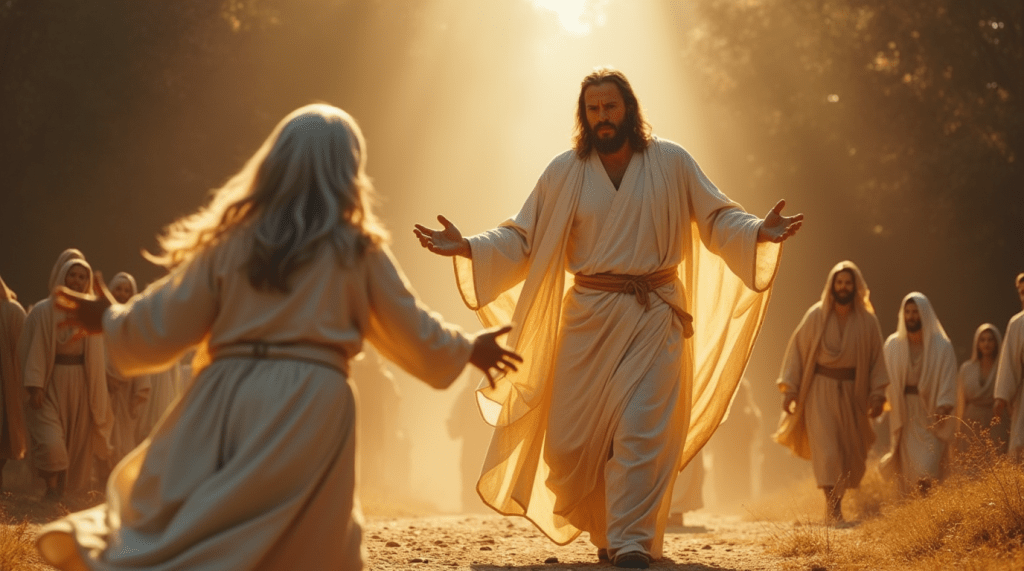
In reality, in issuing commandments, God is more like this:

Watch out! If you keep going that way, you’ll plunge to your death! Please don’t murder and deceive each other. Please don’t follow false gods played by demons who will only suck you into bondage to sin. Please don’t destroy yourselves!
If God were a petty, apathetic, arrogant Greek god, as we’ve read about in literature, He would not go through the trouble of giving the Ten Commandments and trying to teach people. He wouldn’t care what happens to humans. But multiple times He has intervened to prevent the human race from wiping itself out and becoming extinct. We’ve already talked about one instance in the post “The End of Humans – (Almost)”, and there’s more coming in Stages 3 and 4.
But we’re still in Stage 2 and we have a lot more to cover here, as we explore how God deals with humans and sin, and what that tells us about Him.


 God's Work with Planet Earth
Leave a comment