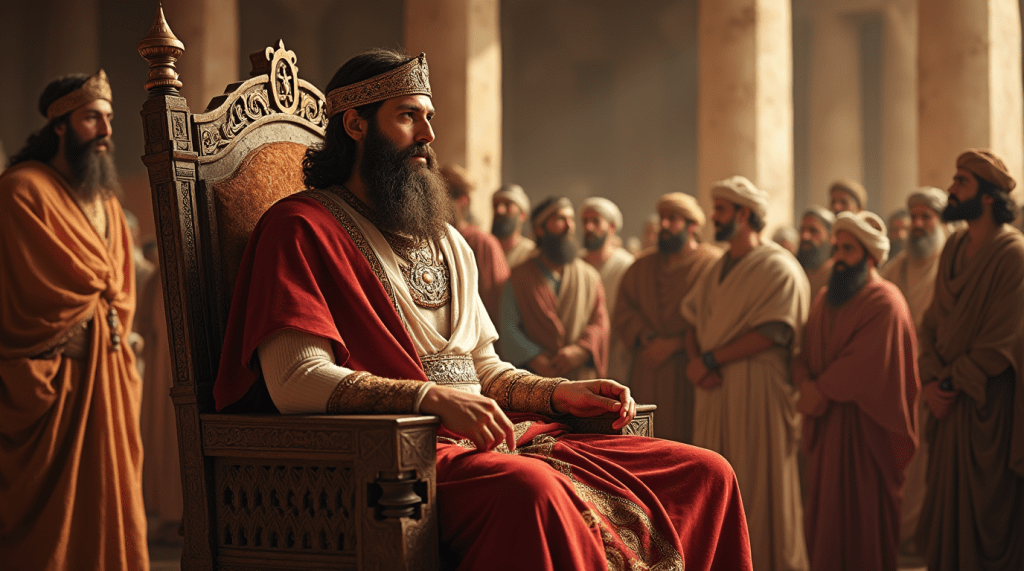
I’m skipping over a lot of the story about how David eventually became king of all Israel. It wasn’t overnight. David was initially made king of only Judah, and for the first seven and a half years, the northern kingdom and most of the tribes of Israel were ruled by Saul’s son, Ishbosheth. When Ishbosheth’s own men murdered him, the Israelite elders made David king over them, meaning that he was finally king over all twelve tribes of Israel.
There are interesting stories about the rivalry between David’s nephew, Joab, who became his general, and Saul’s general, Abner. You can read those in the first few chapters of 2 Samuel.
Jebus becomes Jeru-Salem
During the time of the Judges and King Saul’s reign, Jebus was still occupied by the Jebusites. Roughly 1,000 years earlier, Abraham and his allies rescued his nephew Lot and other Sodomites who were taken prisoner. As Abraham returned the Sodomites to their city, Melchizedek the king of Salem came to meet him. Melchizedek is also described as “the priest of the Most High God” (Genesis 14:18)
We don’t know what happened in those thousand years, but Salem was called Jebus when David became king, and the Jebusites were one of the tribes God told the Israelites He would “cut off”. (Exodus 23:23) And yet after nearly half a century of Israel being in the Promised Land of Canaan, the Jebusites were still in their hilltop fortress, mocking the Israelites and David (2 Samuel 5:6)
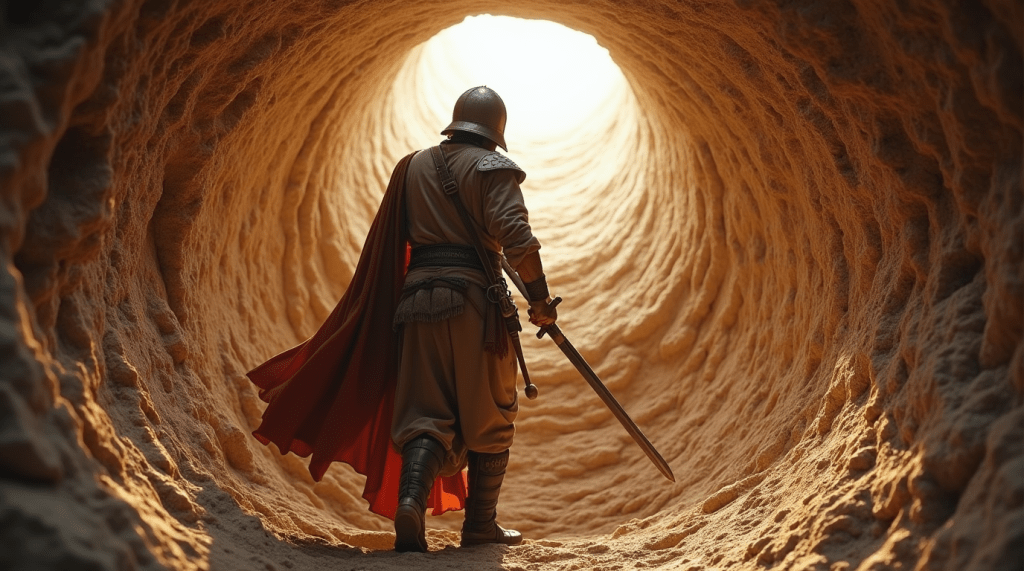
So David told his commanders that whoever was brave enough to climb up the water shaft and attack from inside the city would be his top general. In 1 Chronicles 11:4-9, we learn that Joab, David’s nephew, was the one who pulled this off. So David took the city, and it was called the “City of David”, but more commonly known as Jerusalem.
The Fall of David
In 2 Samuel 21, once David was king, the Philistines attacked them again. David and his men had to fight more giants from Gath (Goliath was the first), which was between Gaza and Jerusalem. One of these giants, named Ishbi-Benob, went after David during a battle to try to kill him, and nearly succeeded. Abishai, the brother of Joab (both sons of David’s sister Zeruiah), came to David’s rescue and killed the giant.
“Then the men of David swore to him, saying, “You shall go out no more with us to battle, lest you quench the lamp of Israel.” 2 Samuel 21:17
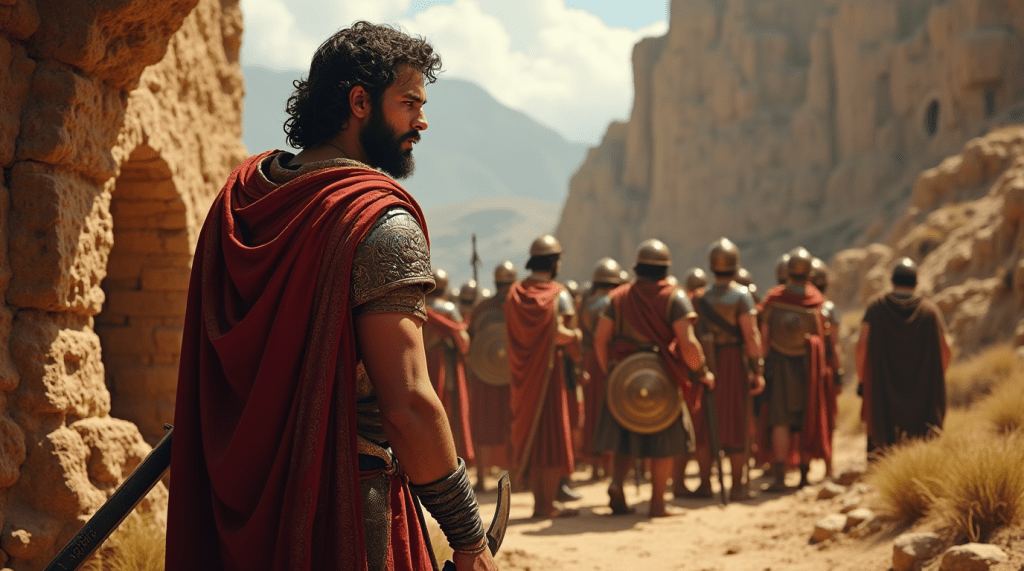
While most of 2 Samuel is a chronological arch of David’s rise and rule, chapters 21-24 are like appendices or additional historical details added, and not in chronological order. So it could be that David nearly being killed by a Philistine giant was the reason, or at least one reason, that David found himself in his palace in Jerusalem while his men were fighting the Ammonites (descendants of Abraham’s nephew Lot).
That’s when David went for a walk on the roof of his palace in the cool of the evening and noticed Bathsheba bathing, probably through a window or in the walled backyard of one of the surrounding houses. Noticing is not a crime or a sin, but David had two choices now:
- Find something to get busy with, to put away from his mind what he had seen, and to occupy his mind with something else
- Dwell on the beautiful woman he’d seen, beginning to desire her and fanaticize about being with her
Unfortunately, he chose the later of the two. At that point it was still all in his mind, and he hadn’t committed adultery. But he had already sinned according to both the Old Testament and the New Testament:
“…you shall not covet your neighbor’s wife…” Exodus 20:17
“But I say to you that whoever looks at a woman to lust for her has already committed adultery with her in his heart.” Matthew 5:28
I personally believe Christ spoke the Ten Commandments at Sinai and He was later born as the human Jesus, so it was the same person speaking in both these passages. Why would the Son of God be so insistent on this point? Well, let’s look at what happened next.
David found out who Bathsheba was, the wife of Uriah the Hittite, one of his warriors who was off fighting with Joab. He had her brought to the palace and “lay with her”.
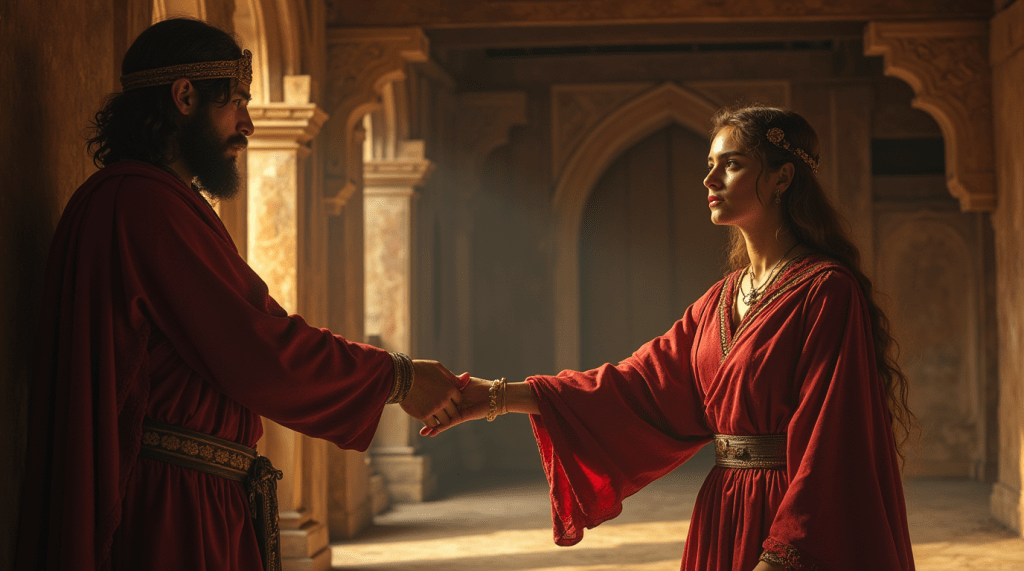
“You shall not commit adultery.” Exodus 20:14
Now David had broken a second law of God. But it didn’t end there, because he got Bathsheba pregnant. This was a problem because her husband was away at war, so everyone would know the baby wasn’t his. And people would have witnessed her coming to the palace.
So David sent a message to Joab, telling him to send Uriah back to Jerusalem with an update of the conflict with the Ammonites. When Uriah got there, David listened to his report, then tried to get him to go home and sleep with his wife. But Uriah said this wouldn’t be right when his fellow warriors were on the battlefield, so he slept in the soldier’s barracks, and didn’t go home. So David’s attempted cover-up did not work.
“You shall not bear false witness against your neighbor” Exodus 20:16
“You shall not steal, nor deal falsely, nor lie to one another.” Leviticus 19:11
How many commandments had David broken at this point?
- Coveting his neighbor’s wife
- Stealing his neighbor’s wife
- Committing adultery with his neighbor’s wife
- Trying to cover up his sins with a deceptive plot
But now David was in big trouble. Lots of witnesses could attest that noble Uriah refused to go enjoy the comforts of home while his brothers in arms were fighting. So Bathsheba’s baby still couldn’t be her husband’s. In desperation, he gave Uriah a sealed message to give to Joab, which instructed the general to put Uriah on the front lines and then withdraw to let him be surrounded and killed by the enemy. Uriah carried his own death warrant back to his commander.
“You shall not murder.” Exodus 20:13
Not just one, but five commandments were broken. Nothing left to do but bring Bathsheba to the palace, after her mourning for her husband, and take her as his eighth wife.
Forgiveness and Consequences
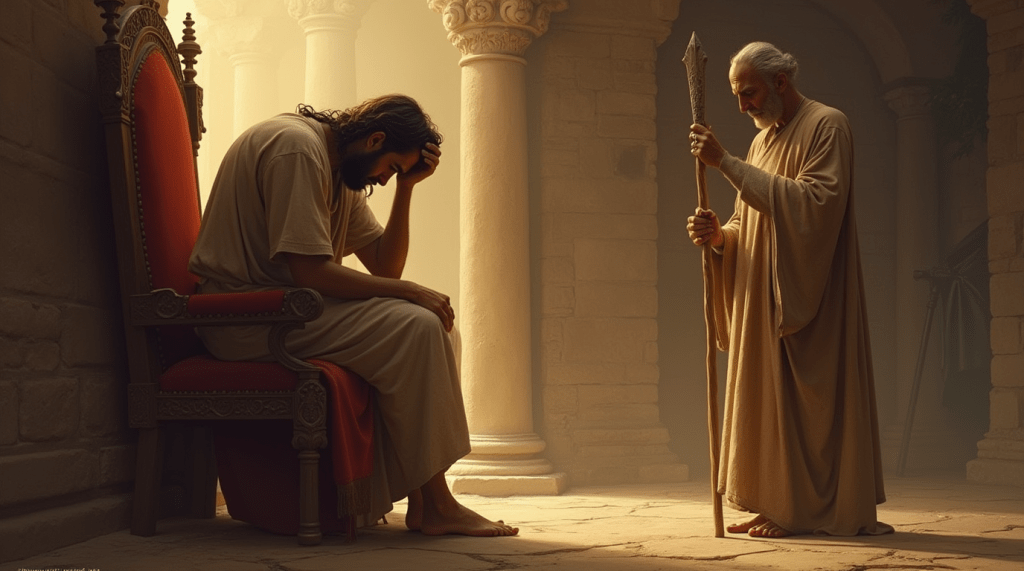
God was very displeased with what David had done, and he sent the prophet Nathan to him with a story. In the story, a rich man had company from out of town, but instead of taking from his own flock to feed them, he took his poor neighbor’s only sheep, which was like a family pet. David was very angry, and exclaimed that this man deserved to die!
Then Nathan said to David, “You are the man! Thus says the Lord God of Israel: ‘I anointed you king over Israel, and I delivered you from the hand of Saul. I gave you your master’s house and your master’s wives into your keeping, and gave you the house of Israel and Judah. And if that had been too little, I also would have given you much more! Why have you despised the commandment of the Lord, to do evil in His sight? You have killed Uriah the Hittite with the sword; you have taken his wife to be your wife, and have killed him with the sword of the people of Ammon. Now therefore, the sword shall never depart from your house, because you have despised Me, and have taken the wife of Uriah the Hittite to be your wife.’ 2 Samuel 12:7-10
“The sword shall never depart from your house.” This became history for Judah and David’s descendants in conflicts between Judah and Israel and with enemy nations around them, and even internal family violence.
“So David said to Nathan, “I have sinned against the Lord.”
And Nathan said to David, “The Lord also has put away your sin; you shall not die. However, because by this deed you have given great occasion to the enemies of the Lord to blaspheme…” 2 Samuel 12:13-14
We’ve learned that the conflict between good and evil, God and Satan, is bigger than just us. “the enemies of the Lord”, whether humans who reject God, or angels who rebelled and were kicked out of Heaven (Rev. 12) are watching. God pointed to Job to prove His righteousness could be demonstrated by humans. He could also point to David, until he broke God’s commandments in this way. Then the Accuser, Satan, could point and laugh, “This is the man after Your own heart?”
God also pronounced additional punishments on David.
“Thus says the Lord: ‘Behold, I will raise up adversity against you from your own house; and I will take your wives before your eyes and give them to your neighbor, and he shall lie with your wives in the sight of this sun. For you did it secretly, but I will do this thing before all Israel, before the sun.’ ” 2 Samuel 11-12
“Before the sun” is like our modern expression “in broad daylight”. David’s son Absalom stole the kingdom from him for a short time and…
“So they pitched a tent for Absalom on the top of the house, and Absalom went in to his father’s concubines in the sight of all Israel.” 2 Samuel 16:22
- David’s first child with Bathsheba became sick and died.
- One of David’s sons raped his sister, and his other son killed him for it.
- Two of his sons tried to take over David’s kingdom before he died.
So much sorrow and so many lives damaged because the king did not exercise self-control over his thoughts. There were those in the palace who knew what happened or could figure it out, so David who had been a righteous ruler lost honor and respect in their eyes. His example to the people took a horrible dive.
God punished David, but He also forgave him. And this is how we know:
“…of David and Samuel and the prophets: who through faith subdued kingdoms, worked righteousness, obtained promises, stopped the mouths of lions, quenched the violence of fire, escaped the edge of the sword, out of weakness were made strong, became valiant in battle, turned to flight the armies of the aliens.” Hebrews 11:32-34
None of David’s sins are recounted here, but he is included in the faith hall of fame, or the faith chapter. God forgives but He often allows us to suffer consequences for the choices we’ve made. God is very opposed to injustice, and what David did was very unjust toward his own faithful warrior.
So how could David be considered righteous and a man after God’s own heart?
“For a righteous man may fall seven times and rise again…” Proverbs 24:16
Evidently, even righteous people can fall. But they don’t give up, and they keep reaching for God. All through the Psalms you see David writing that he wants to know and follow God and for God to purify his heart.
As we continue this series, we’ll continue to see that God wants to forgive and restore as many people as will humbly confess and repent as David did.


 God's Work with Planet Earth
Leave a comment