This phrase, “the sins of Jeroboam”, shows up 22 times across 1 Kings, 2 Kings, and 2 Chronicles. It’s almost always in the context of later kings following Jeroboam’s bad example. But before we look at what was so bad, let’s back up to the Bible’s first mention of Jeroboam.
Prophecy and Exile
Starting in 1 Kings 11:26, Jeroboam was from the tribe of Ephraim, and worked for King Solomon as a director of labor for “the house of Joseph”, which would have been the tribes of Ephraim and Manasseh. He was a “mighty man of valor”. Interesting side note: This description in Hebrew “gibbor gibbor” is the exact same term used to describe the giants born to the sons of God and daughters of men in Genesis 6:4, before the Flood. And he was an administrator in Solomon’s kingdom.
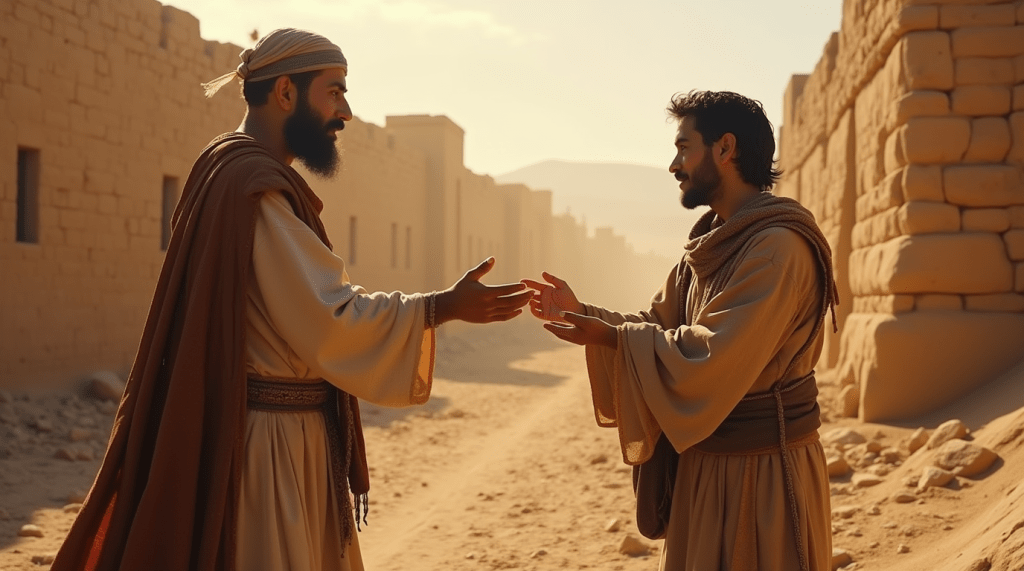
One day Jeroboam was leaving Jerusalem and the prophet Ahijah met him wearing “a new garment”. The prophet tore his new garment into twelve pieces, and gave ten of them to Jeroboam, saying that God would give him ten tribes of Israel to rule. God had told Solomon this would happen because of his idolatry. But God had told David that his descendants would continue to rule, and so Solomon’s son would receive the other two tribes, Judah and Benjamin. Evidently Solomon heard about this, and he reacted as King Saul had.
“Solomon therefore sought to kill Jeroboam. But Jeroboam arose and fled to Egypt, to Shishak king of Egypt, and was in Egypt until the death of Solomon.” 1 Kings 11:40
Israel Divided
Long story short, Rehaboam, Solomon’s son, expected Israel to make him king, and he didn’t listen to Solomon’s older wise counselors, but to the young men he’d grown up with. He dealt arrogantly and harshly with the people.
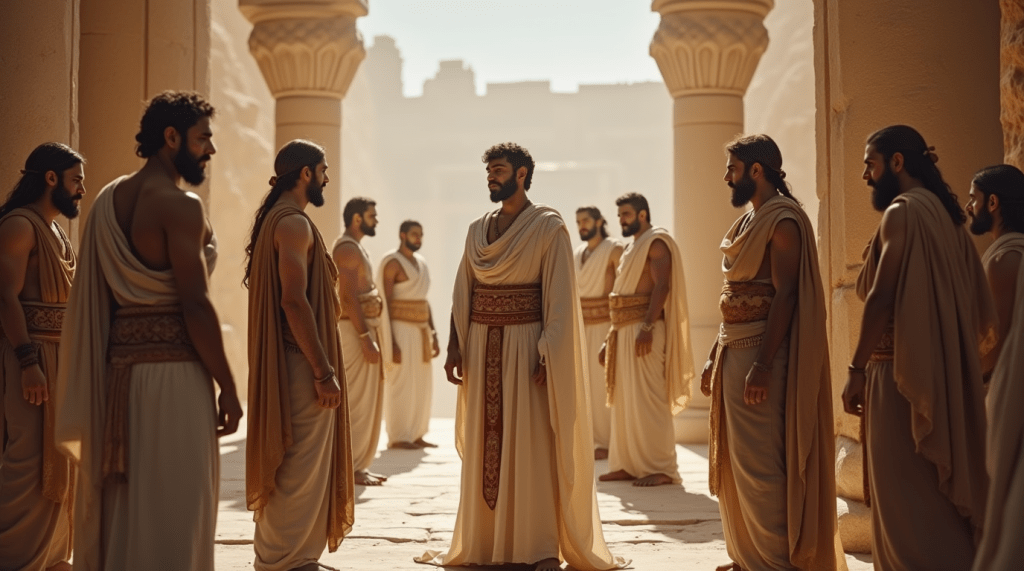
Jeroboam came back from Egypt when he heard that Solomon had died, so he became an advocate for the tribes to Rehaboam. When Rehaboam told them he would tax them heavier and work them harder than his father Solomon had, ten of the twelve tribes rebelled and made Jeroboam their king, just as God had said would happen.
This almost caused a civil war, but God sent Shemaiah, who came and told Rehaboam and the leaders of Judah and Benjamin, who were gathering for battle against the other tribes:
‘Thus says the LORD: “You shall not go up nor fight against your brethren the children of Israel. Let every man return to his house, for this thing is from Me.” ‘ ” Therefore they obeyed the word of the LORD, and turned back, according to the word of the LORD.” 1 Kings 12:24
“…this thing is from Me.” God was letting Rehaboam and Judah know that He was separating the majority of Israel due to Solomon’s prior idolatry.
Sins of Jeroboam
Now with that context, we get to the reason this phrase was repeated so many times describing later kings.
And Jeroboam said in his heart, “Now the kingdom may return to the house of David: If these people go up to offer sacrifices in the house of the LORD at Jerusalem, then the heart of this people will turn back to their lord, Rehoboam king of Judah, and they will kill me and go back to Rehoboam king of Judah.”
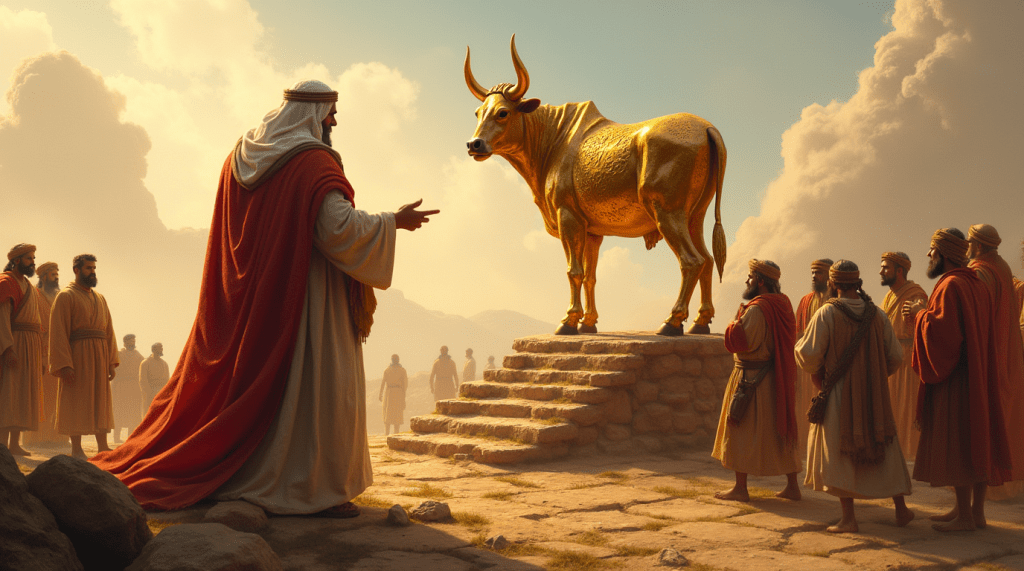
Therefore the king asked advice, made two calves of gold, and said to the people, “It is too much for you to go up to Jerusalem. Here are your gods, O Israel, which brought you up from the land of Egypt!” And he set up one in Bethel, and the other he put in Dan. Now this thing became a sin, for the people went to worship before the one as far as Dan. He made shrines on the high places, and made priests from every class of people, who were not of the sons of Levi.” 1 Kings 12:26-31
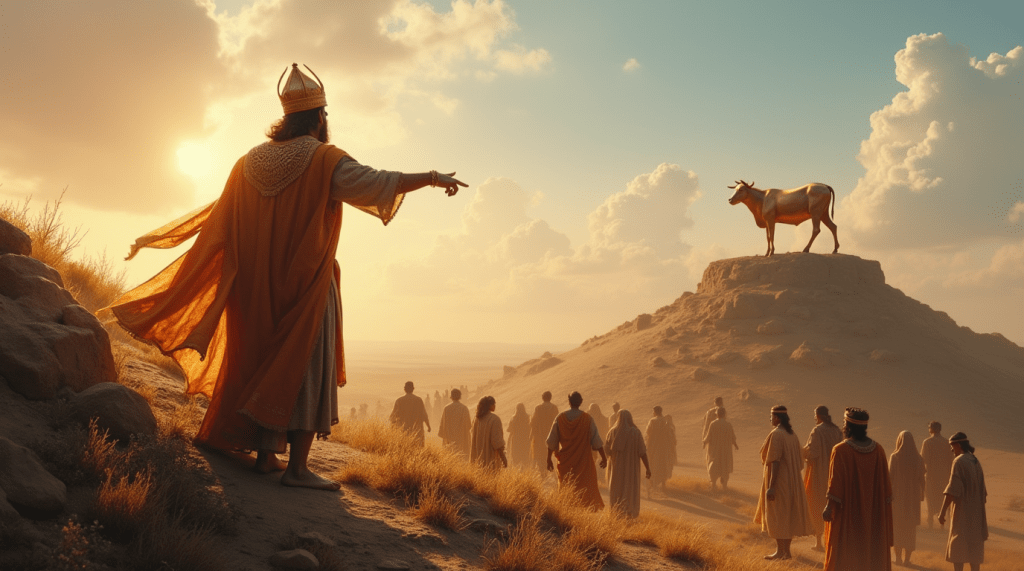
First of all, Jeroboam forgot all about God’s promise to give him the vast majority of the kingdom, ten out of twelve tribes. He started trusting in his own wisdom (and the wisdom of whoever he “asked advice” from). Ultimately, both Rehaboam and Jeroboam went with bad advice. Your source of “wisdom” matters!
Second, who brought Israel out of Egypt? Jehovah. And Jehovah had commanded:
“You shall not make for yourself a carved image–any likeness of anything that is in heaven above, or that is in the earth beneath, or that is in the water under the earth;” Exodus 20:4
So what Jeroboam did was tell the people they could worship the true God by disobeying Him – using pagan worship practices.
Why golden cows? It had been several hundred years since God brought Israel out of Egypt and they got the idea to make a golden cow idol in the Sinai desert. Now Jeroboam comes back from Egypt and did the exact same thing. The bull is associated with both,
- The Egyptian god Osiris
- The Canaanite god Baal
As we’ve seen from the Bible, fallen angels were luring people into worshiping them as gods. I find it interesting that all these pagan god’s seem obsessed with fertility, sexual reproduction, and resurrection from death. These are all things God does through humans, but not through angels. What I mean is God gave humans the ability to reproduce, but not angels, and the Bible has a lot to say about God resurrecting humans from death.
So the false gods play these parts, and because they are rebelling against their Creator, they twist and pervert pure things like sex and worship to lead humans to their destruction.
Finally, the sins of Jeroboam were trying to substitute pagan forms of worship while claiming to worship the true God. It’s called syncretism: Blending different cultures and religions together. Can these two coexist?
- Christianity: Monotheistic (one God who made everything)
- Paganism: Pantheistic (many gods can be worshipped)
Believe it or not, that tradition and syncretism continues to this day in many Christian churches.
Prophecy and Warning
It’s one thing to violate an ancient commandment of God against setting up images, but to ignore multiple startling warnings is determined rebellion. In 1 Kings 13, Jeroboam was at an altar he had set up when a “man of God” showed up and made some shocking predictions.
- Josiah would be born of the “house of David” (Jeroboam reigned around 920 BC, and Josiah’s reign started 640 BC)
- Josiah would burn the bones of pagan priests on this same altar
- Josiah would destroy this pagan altar
- This altar would split apart and spill out the ashes on it
When Jeroboam heard this man of God saying these things, he commanded that he be arrested. But when the king pointed at him, his arm instantly “withered”. The Hebrew word “yabesh” means to dry up. At the same time, the altar cracked open and the ashes poured off of it.
You’d think that after God said Jeroboam would be king of ten tribes, and then it happened, that Jeroboam would respect God and take this warning seriously. But he didn’t. The same prophet, Ahijah, who prophesied that God would give ten tribes to Jeroboam, now much older, prophesied that God would cut off his family line because he insisted on leading Israel into sin. God had not made the same promise to Jeroboam that He made to David. This is found in 1 Kings 14.
God’s complaints against Jeroboam:
- You didn’t follow David’s example of keeping My commandments
- You did more evil than all those before you
- You set up images to provoke Me to anger
- You cast Me behind your back
So as God predicted through the prophet, one of Jeroboam’s sons died of illness, and the other only reigned two years after him before the kingdom was taken over by Baasha, who was not related to Jeroboam. Is this cruel of God? No, this is God limiting evil, keeping His promise to Abraham to bless His descendants, in spite Jeroboam using his God-given freedom of choice to lead others to destruction.
How was Jeroboam leading people to destruction? Because God is the Source of all life, and when you reject God, there is no life at all. And basically, Solomon and Jeroboam set the example for all the kings that came after them.
And almost 300 years later, the prophecies of the unnamed “man of God” at Jeroboam’s altar came true.
“Moreover the altar that was at Bethel, and the high place which Jeroboam the son of Nebat, who made Israel sin, had made, both that altar and the high place he broke down; and he burned the high place and crushed it to powder, and burned the wooden image. As Josiah turned, he saw the tombs that were there on the mountain. And he sent and took the bones out of the tombs and burned them on the altar, and defiled it according to the word of the LORD which the man of God proclaimed, who proclaimed these words.” 2 Kings 23:15-16
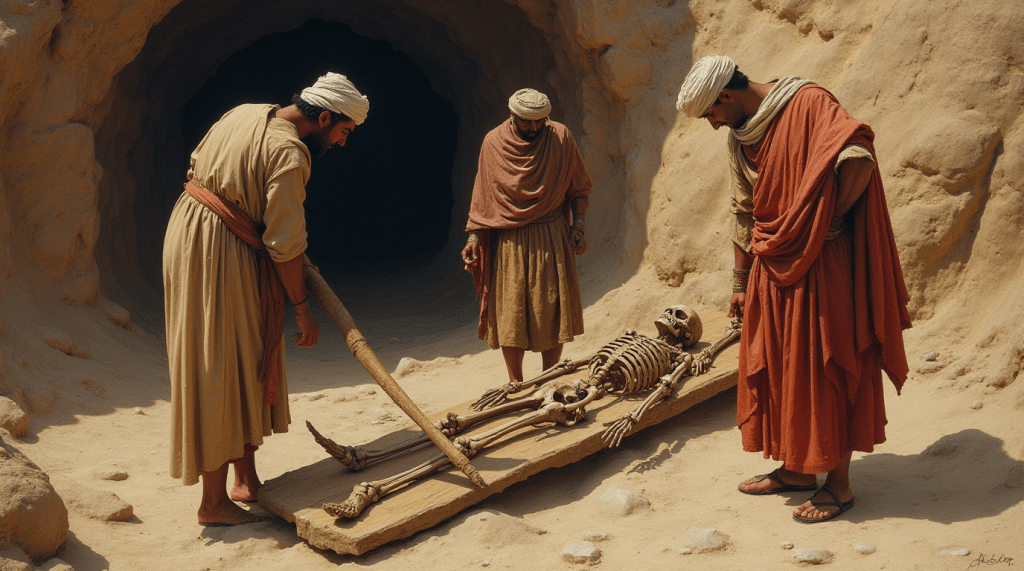
These bones in tombs on the “high place” were the bones of Jeroboam’s priests who had officiated at this altar over the past centuries and were honored by being buried there. By burning their bones on this altar, Josiah “defiled” it before destroying it. All of this was reinforcing to Israel (and us who read it in the Bible later) that God meant it when He commanded no images or forms of worship taken from pagan religions.
I am studying and writing my way through this blog to learn more about who God is by what He has done. Jeroboam’s story shows us once again that God hates evil, but He doesn’t always go scorched earth Sodom and Gomorrah. He often introduces guard rails to limit evil and guide His people. He cut off Jeroboam’s family from ruling to protect the rest of Israel.
God told the twelve tribes over and over that He wanted a fair and just society for them, without war and bloodshed. But in His “longsuffering”, He worked with them even when they kept falling into injustice, disrespect, selfishness, hate, and finally sexual immorality and human sacrifice. God never gave up on them, but He disciplined them harshly at times to get them to see.


 God's Work with Planet Earth
Leave a comment