
In the Dark Ages in Christianity there were two opposing views on scripture.
- Only the “clergy” (priests, bishops, cardinals) could accurately understand the scriptures and had to interpret it for the “laity” (everyday normal people, church members).
- God inspired and preserved the scriptures for all humans to learn from, and intended every person to read and be transformed by them.
Now in our time, because everyone has access to a Bible, any who care to read have opinions and interpretations. So some say “See? Regular people cannot properly interpret scripture, and this is why we have so many churches and denominations”.
Is this true? We’ll get into it, but first we need to answer some questions which this argument brings up.
What is the purpose of scripture?
“and that from childhood you have known the Holy Scriptures, which are able to make you wise for salvation through faith which is in Christ Jesus. All Scripture is given by inspiration of God, and is profitable for doctrine, for reproof, for correction, for instruction in righteousness, that the man of God may be complete, thoroughly equipped for every good work.” 2 Timothy 3:15-17
- The scriptures can “make you wise”, inform and grow your faith, helps you learn doctrine, reproves and corrects you, shows you how to live righteously according to God’s will.
- Helps you become complete and equips you for good works.
- “All Scripture is given by inspiration of God”
“For whatever things were written before were written for our learning, that we through the patience and comfort of the Scriptures might have hope.” Romans 15:4
- These things were recorded “for our learning”
- The scriptures help us to be patient in our faith while we wait for Jesus to return, and this belief comforts us in this world
- Because of all this, we have the hope of salvation
“And truly Jesus did many other signs in the presence of His disciples, which are not written in this book; but these are written that you may believe that Jesus is the Christ, the Son of God, and that believing you may have life in His name.” John 20:30-31
- Not everything Jesus said or did is in the Bible.
- But the things that are were recorded were written down so that we could have faith in Jesus, which leads to eternal life because of His sacrifice. (Another confirmation that faith in Jesus is the Biblical requirement for salvation.)
Who is qualified to interpret scripture?
This is the big argument at hand. Can only certain people interpret the Bible and share that interpretation with others? Even many “Protestant” Christians follow the Catholic model of getting their Bible understanding from their pastor and not reading and praying for understanding themselves. But what does the Bible say?
“But the natural man does not receive the things of the Spirit of God, for they are foolishness to him; nor can he know them, because they are spiritually discerned.” 1 Corinthians 2:14
Aha! So it’s true that anyone who doesn’t have the guidance of the Holy Spirit cannot understand spiritual things. Why is this?
“knowing this first, that no prophecy of Scripture is of any private interpretation, for prophecy never came by the will of man, but holy men of God spoke as they were moved by the Holy Spirit.” 2 Peter 1:21
The Holy Spirit inspired prophets and apostles to write what was written in scripture, and only the Holy Spirit can unlock the true meaning. “No private interpretation”, and we set ourselves up for deception if we try to make up our own explanations. This is why I personally believe it’s so important to pray asking God for understanding before reading/studying the Bible.
Jesus promised this to His followers:
“However, when He, the Spirit of truth, has come, He will guide you into all truth; for He will not speak on His own authority, but whatever He hears He will speak; and He will tell you things to come.” John 16:13
But let’s understand that the Holy Spirit is not sitting in front of you, audibly telling you things. He could, but He’s usually guiding your understanding as you read and contemplate what God’s Word says.
In my experience, I might be thinking one way when I receive a contradicting thought (a spiritual correction) which tells me “no, it’s actually this way instead of what you’re thinking”.
Back to the original question: So who is qualified to interpret scripture?
“For as many as are led by the Spirit of God, these are sons of God.” Romans 8:14
“God is Spirit, and those who worship Him must worship in spirit and truth.” John 4:24
What does it mean to “worship in spirit”?
- Praying and asking for guidance and understanding, and protection from deception is spiritual.
- Reading what the Holy Spirit inspired humans to write can mean receiving spiritual truths from our Creator (if we’re open to being taught instead of superimposing our preconceived ideas over scripture).
What does it mean to “worship” in “truth”?
- Reading the history and prophecy (and recognizing where prophecy has become history)
- Seeing Jesus’ example in the gospels
- Reading admonitions from apostles about how to live as a Christian (following Christ)
These are all ways to learn the real and lasting truth. And then we follow God as best we know, as our understanding grows.
Is non-clergy interpretation the reason for many denominations?
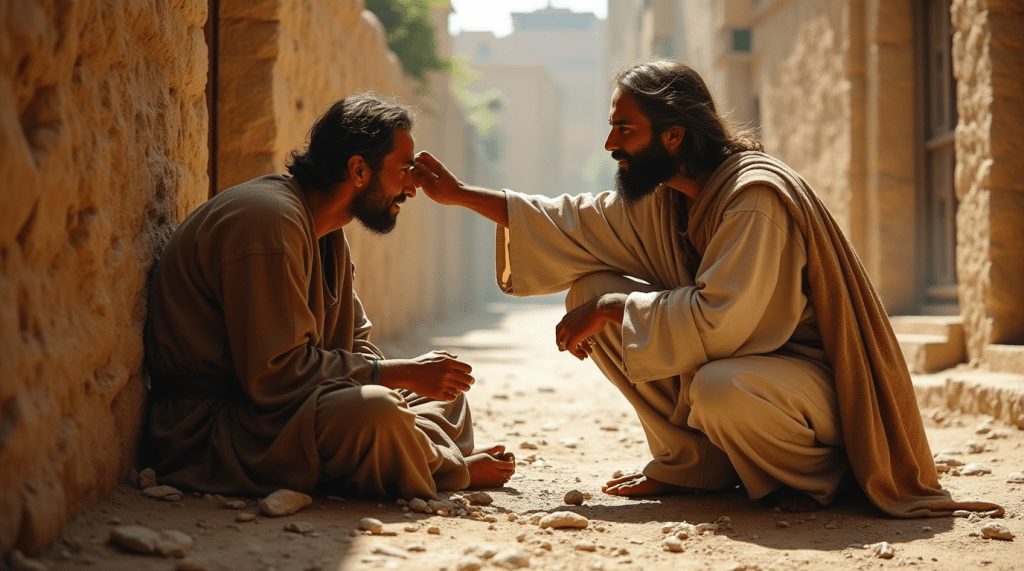
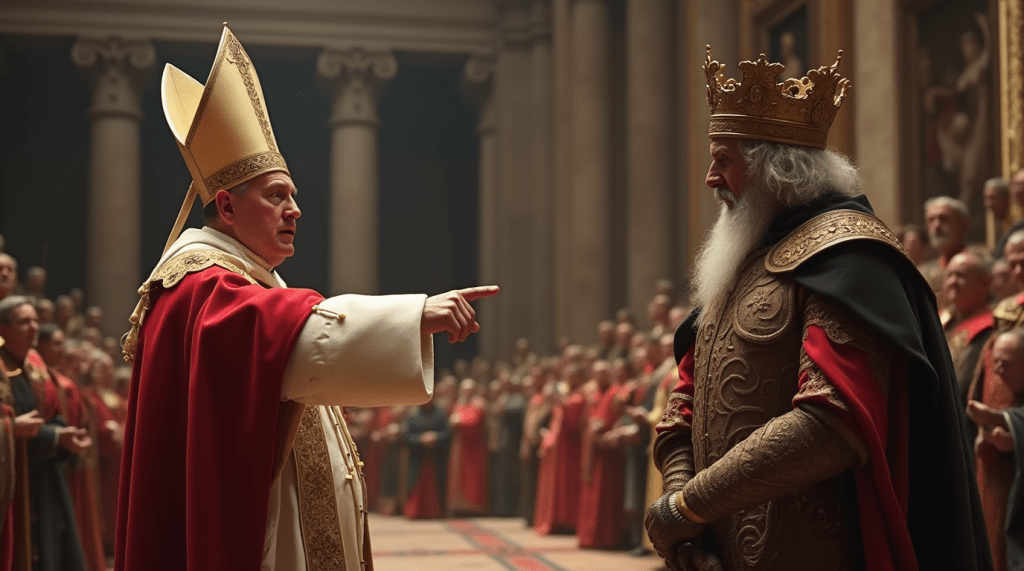
First of all, the original Early Christian Church started by Jesus and the Apostles was in stark contrast to the vast religious and political network 400 years later. During the 300’s, 400’s AD and beyond, this church morphed into the Roman Catholic Church. While Jesus and the Apostles traveled in poverty and humbly shared the gospel, the later church built massive cathedrals and demanded respect and acknowledgement of their power and authority. Part of this was claiming they were the only ones who could interpret scripture.
Here’s a high level sequence we see from history:
- First 3 centuries – The Early Christian Church was persecuted by the Jews and the Romans, but it thrived, spread, and grew. Under these conditions it remained humble and faithful for the most part.
- 313 AD – Edict of Milan legalized Christianity in the Roman Empire. Over the next several centuries, the church began to adopt pagan religious practices of the empire which legalized it.
- 538 AD – The Roman Church filled a power vacuum as the Roman Empire collapsed, gaining political power in Europe and the rest of the “civilized” world. (the original church was centered in Jerusalem, not Rome)
- During the 1200’s AD – Several council cannons (church laws) were created which officially forbid the common people to possess and read the scriptures in their own language. Consequences of violating these laws included excommunication, dispossession of property and home, death for going against the church, including burning at the stake for some who would not give up Biblical beliefs which contradicted church doctrine.
- During 1300’s to 1700’s – The Protestant Reformation grew as more educated people gained access to the scriptures, as in violation of church law, translations were created in common languages.
All of this was predicted in the Bible, and looking back we can see that the history of the last 2000 years played out just like God said it would.
Here’s a couple examples of church laws forbidding reading and possession of the Bible:
“We prohibit also that the laity should not be permitted to have the books of the Old or New Testament; we most strictly forbid their having any translation of these books.” Council of Toulouse, Canon 14 (1229 AD)
“No one may possess the books of the Old and New Testaments, and if anyone possesses them he must turn them over to the local bishop within eight days, so that they may be burned…” Council of Tarrogona, Canon 2 (1234 AD)
Why would the church Jesus started be so intent on forbidding and destroying the writings that pointed to Him? To limit heresy and false interpretation? Or because the church had adopted many pagan religious practices and beliefs that would be easily recognized if people had access to the scriptures?
In actual fact, it was because of a lack of general knowledge of the scriptures that the Protestant Reformation was necessary. And still, the Reformers each found different errors and contradictions. So they started churches with differing beliefs, because while they corrected some of the beliefs and practices contrary to scripture, in other things they continued to follow their Mother (Roman) Church.
The cause of many denominations is not the “laity” (regular church members) reading the Bible. Rather it is the original church becoming corrupted and Protestant reformers only found some of the contradictions with scripture, so their churches have different beliefs.

Bottom Line
It’s true that no human is qualified to interpret scripture on their own. We need God’s Spirit to guide our understanding. This means a priest without the Spirit will not understand God’s Word accurately, while a regular church member who is humble and teachable can be led to the real truth by the Spirit. Anybody can be wrong without the Spirit, so all should humble themselves and seek the guidance and wisdom God desires to share with us.
God may address His people as a whole through the scriptures, but He works in the lives of individuals in different ways and times, according to what He knows they need. We’re not all at the same place, and we should NEVER try to force someone else into our current understanding. Share your faith, then let the Holy Spirit go to work. Don’t try to do His job.
The 3rd Stage?
How does this relate to the 3rd Stage of God’s Work with Planet Earth? Let’s remember that God’s intention is to reconcile rebellious humans who have fallen into sin back to Himself and His original plan for them (us). Some of His most incredible efforts include inspiring, preserving, distributing the scriptures, and sending His own Son to become human and win by losing when He died on a Roman cross. But God’s enemy, Satan, had a strong reaction to his deceptions and plans being foiled.
“The devil has come down to you, having great wrath, because he knows that he has a short time.” Revelation 12:12
“The dragon was enraged with the woman, and he went to make war with the rest of her offspring, who keep the commandments of God and have the testimony of Jesus Christ.” Revelation 12:17
The dragon in the Bible represents Satan (Rev. 12:9) and a woman represents a church (either faithful or rebellious/apostate). Doesn’t it make sense that Satan would trying to hide the scriptures from humans, or distort them so people wouldn’t know “the commandments of God”?
So the real reason for all the religious confusion and wars during the last 2,000 years, is Satan’s efforts to shut down the revolution Jesus started. He couldn’t discourage the Early Christian Church with bitter and violent persecution, so he infiltrated the church to corrupt it from the inside.
Well, here you and I are, down here at the end of time, in a world with thousands of Christian denominations. But we still have only one Holy Spirit to guide our understanding, and that is what we need to be praying for.

 God's Work with Planet Earth
Leave a comment