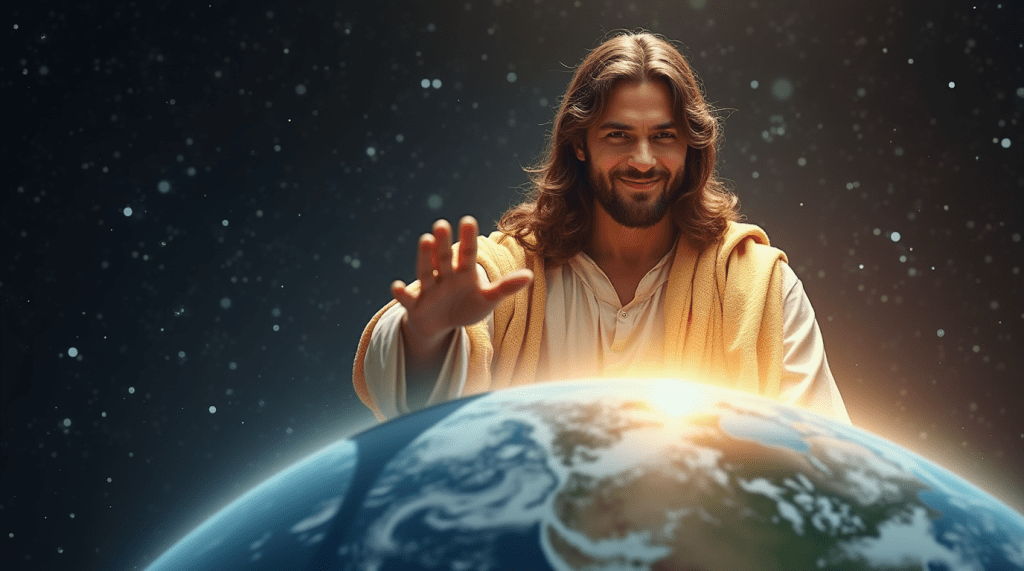
Christ who is God, according to the Bible, has performed many roles throughout the history of this world. For example: He is the Creator of our world.
“In the beginning was the Word, and the Word was with God, and the Word was God. He was in the beginning with God. All things were made through Him, and without Him nothing was made that was made. In Him was life, and the life was the light of men.” John 1:1-4
Christ is called the Word, because:
- In Genesis 1, He spoke the world and its creatures into existence.
- When He was born as the human Jesus, He verbally taught God’s ways and showed God’s character to the people.
Christ was also a Teacher, and the Apostle Paul makes it clear that the cloud by day and pillar of fire by night that went with the Israelites through the Sinai Desert was Christ.
“…and that Rock was Christ.” 1 Corinthians 10:4
In the Sinai Desert, Christ gave the Ten Commandments and tried to show the previously enslaved Israelites how to live clean, healthy, just/fair lives.
Is there any more support for the idea that it was Christ who guided the Old Testament Israelites? He said it Himself:
“…then they will look on Me whom they pierced…” Zechariah 12:10
But we are currently in Stage 3 out of 5 Stages of God’s work with Planet Earth, so I want to zero in on Christ’s roles during this 2,000 year period we live in, in the real world right now.
Christ the Teacher & Shepherd
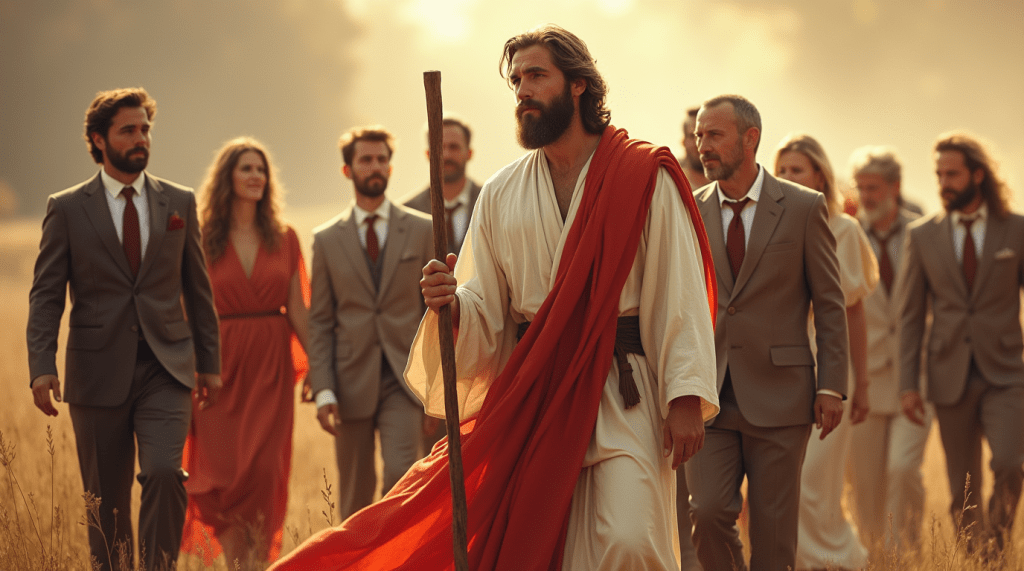
When Christ was born as Jesus, fulfilling many Old Testament prophecies, He first lived a life and a ministry before His ultimate sacrifice. Jesus said something which is easy to read over casually, but it’s really incredible if you think about the real meaning.
“Most assuredly, I say to you, he who hears My word and believes in Him who sent Me has everlasting life, and shall not come into judgment, but has passed from death into life.” John 5:24
There are several takeaways here, so let me list the ones I see:
- The person who hears what Jesus says and believes God “has everlasting life” (He is referring to God the Father who sent Him)
- The Greek word “krisis” (judgement) means “for or against” related to a “tribunal”, or “justice” according to divine law.
- Jesus is really saying those who believe His words “shall not come into judgement”? Jesus has the authority to say this (John 5:22).
- Those who do not come under “condemnation” (King James Version) will pass “from death into life”
This was a teaching of Jesus, and Paul expanded on this idea:
“What fruit did you have then in the things of which you are now ashamed? For the end of those things is death.
But now having been set free from sin, and having become slaves of God, you have your fruit to holiness, and the end, everlasting life.” Romans 6:21-22
During Jesus’ ministry, He worked to “bind up the broken and strengthen what was sick” (Ezekiel 34:16), and heal the brokenhearted and set the captives free (Isaiah 61:1). He healed diseases and freed people from demon oppression or possession.
“I am the good shepherd. The good shepherd gives His life for the sheep.”
“I am the good shepherd; and I know My sheep, and am known by My own.” John 10:11, 14
Jesus made the comparison in this passage that hired shepherds would run and leave the sheep if danger came (wild animals. bandits). But a true shepherd who really cared for the sheep would defend the flock with his life.
Christ the Lamb of God
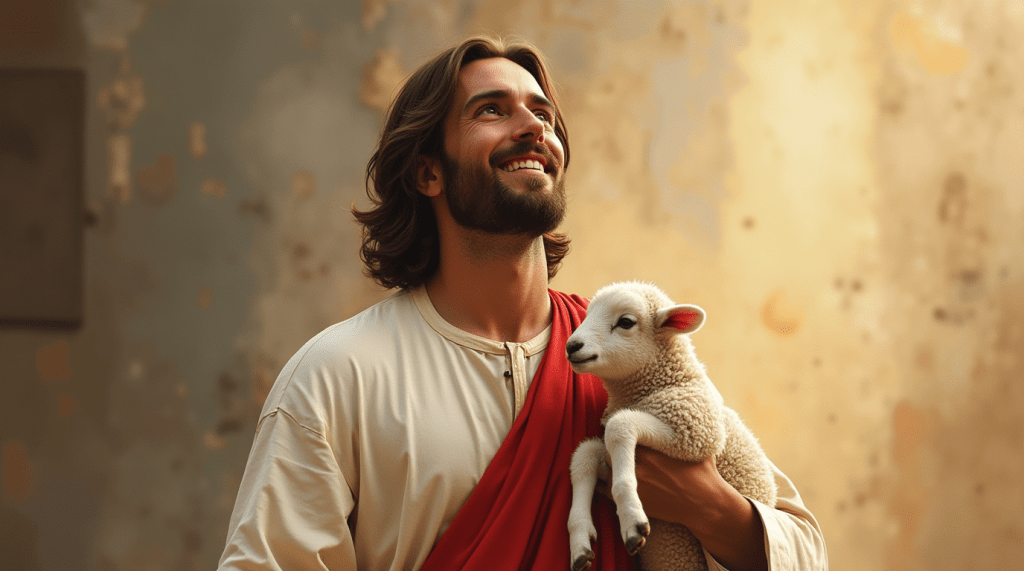
“The next day John saw Jesus coming toward him, and said, “Behold! The Lamb of God who takes away the sin of the world!” John 1:29
While Genesis 4 does not include a direct command from God that a lamb was to be sacrificed to represent the future Messiah, Cain and Abel’s sacrifices insinuate that God had specified a lamb. For 4,000 years, sacrificing a lamb was meant to help God’s people keep the mission of the Messiah in focus.
After Jesus was crucified and resurrected, the apostles understood His purpose more clearly:
“For Christ also suffered once for sins, the just for the unjust, that He might bring us to God, being put to death in the flesh but made alive by the Spirit,” 1 Peter 3:18
- Because Jesus was both the Son of God and did not sin (He was “just”), that qualified Him to die “once” for the sins of us “unjust” humans
- The ultimate goal of all of this is to bring humans into harmonious and personal connection with God once again
- Peter is touching on the conflict between the “flesh” (animal lusts and passions) and the Spirit (God’s Spirit working in our hearts to transform our characters)
“By that will we have been sanctified through the offering of the body of Jesus Christ once for all.” Hebrews 10:10
Let’s remember that “justified” means to have guilt removed and to be forgiven, while “sanctified” means to be cleansed and purified so that the sin is not only forgiven, but gone from the heart and character.
Christ our High Priest
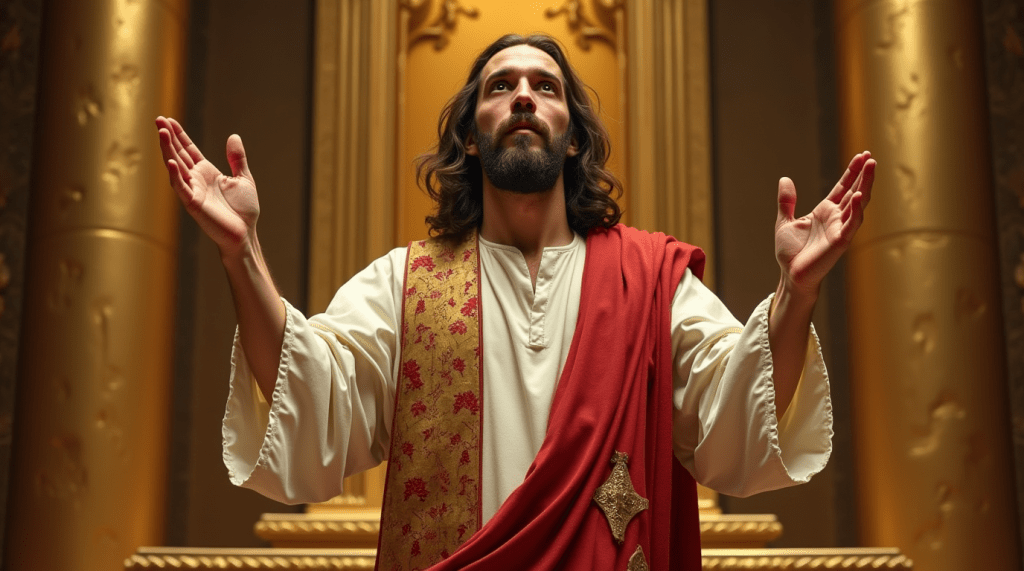
“This hope we have as an anchor of the soul, both sure and steadfast, and which enters the Presence behind the veil,
where the forerunner has entered for us, even Jesus, having become High Priest forever according to the order of Melchizedek.” Hebrews 6:19-20
- The “Presence behind the veil” is the presence of God the Father (in the same way God’s presence was in the Most Holy room of the sanctuary)
- Jesus is our “forerunner” because He was resurrected from death, taken up into Heaven into God’s presence, and this is what God wants for anyone who will listen and follow Him
- Jesus entered God’s presence “for us”, because though He is God, He was also born as a human like us, becoming our “brother” (Hebrews 2:11)
“For there is one God and one Mediator between God and men, the Man Christ Jesus,” 1 Timothy 2:5
“Seeing then that we have a great High Priest who has passed through the heavens, Jesus the Son of God, let us hold fast our confession.
For we do not have a High Priest who cannot sympathize with our weaknesses, but was in all points tempted as we are, yet without sin.” Hebrews 4:14-15
- Jesus as High Priest is God, but also human, and so qualified to be a “Mediator” for humans with God.
- Jesus experienced temptation, persecution, hardships, just like the rest of us humans, so He understands what we go through
Christ the King of Kings
One of the reasons the Jewish leaders rejected Jesus as Messiah at His first coming was that they conflated His first and second comings in the Old Testament prophecies. To be fair, it is not clear in the Old Testament that Jesus would come first as the “Lamb” and a second time as the “King of Kings”. But when you add the New Testament, and especially Revelation, these two roles Jesus takes on at two separate comings are clear.
“Now I saw heaven opened, and behold, a white horse. And He who sat on him was called Faithful and True, and in righteousness He judges and makes war.
And the armies in heaven, clothed in fine linen, white and clean, followed Him on white horses.
And He has on His robe and on His thigh a name written:
KING OF KINGS AND LORD OF LORDS.” Revelation 19:11, 14, 16
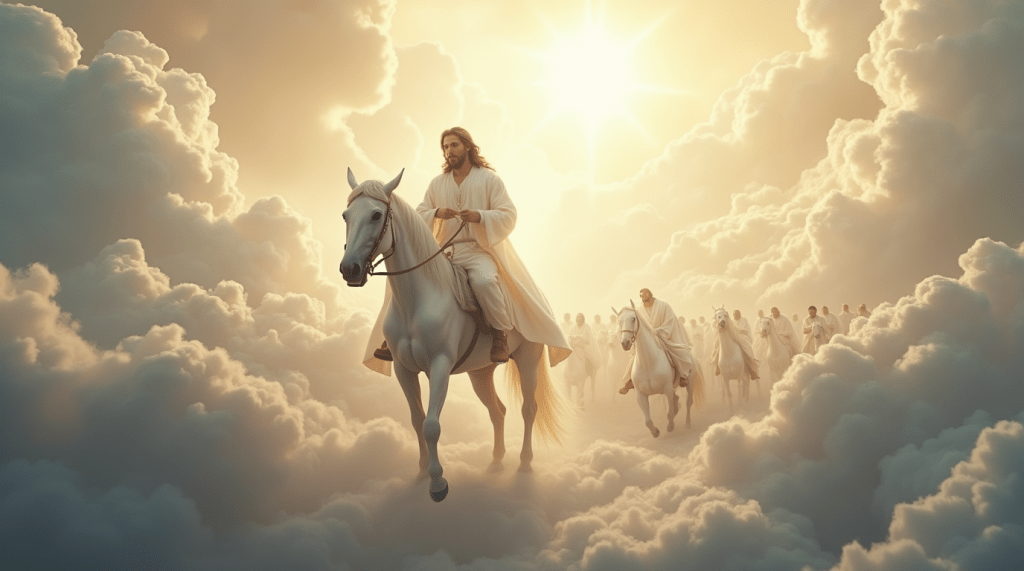
This AI-generated image is inspired by the passage above. Just keep in mind that in the scope of an entire Universe with 2 trillion observable galaxies, God is spending a lot of time to reconcile the humans of Planet Earth to Himself.
Christ’s second coming will kick off Stage 4 of the 5 Stages of God’s Work with Planet Earth. We’ll get into Stage 4 soon. This is where a lot of Christians disagree about what will happen, for multiple reasons:
- Stage 4 hasn’t happened yet, so it is in our future. (The events of Stage 3 are mostly documented history now)
- The Devil is very busy sowing confusion in churches as to what God’s Word says
- Humans in general don’t like to be wrong, and they will adamantly defend their current belief despite it being contrary to scripture
So we need to stick carefully to what the Bible actually says and not overlay our own interpretations (2 Peter 1:20).





Leave a Reply